Best Practice Workflow: Patient Matching

Description:

The purpose of this document is to provide the best practice workflow for the secure messaging to external provider’s process. Information sent in this process may include transition of care documents and other patient information that will add value to the patient’s existing medical record.

Workflow:

Messages from external sender are received in to the Message Pool titled Secure Non-Matched, meaning that they are not matched to a patient within PowerChart.


The Message will contain an attachment from the external sender and the will need to be matched to a patient within PowerChart by selecting the Patient Match option.

To Patient Match process opens a pop up with Possible Matches determined by preset patient identifiers. 

Review the list of Possible Matches and select the patient that the message should belong to.

If the Patient has not been seen at TTP, UMCP, or UMP, then they may not be in PowerChart.

  • ·   Best Practice is to wait until the patient appointment and attach the information to that encounter   


The Saved information can be found in Clinical Notes under Clinic/Office

     > Appropriate department

          > In-Clinic Communication


Why is my screen locking me out?


Industry best practices, regulations, and policies usually stem from some negative experience. One such item which has come up lately is the computer screen lockout of 10 minutes. This is a regulatory requirement (HIPAA and PCI), Industry best practice based on NIST and ISO, as well as a HITRUST requirement. UMC has had this policy in place for the past three years, however we recently discovered not all computers were being affected by this policy.

When a user walks away from a computer and is logged in then anyone, employee or non-employee, now has access to information which they may not be entitled and this information is required to be protected by federal and state law. This lock out policy protects not only UMC and our patients but also our employees who may forget to lock the computer on their own. Whereas we wish healthcare was exempt from malicious actors who wish to profit from our data, this is just not the case. In fact healthcare has become the #1 target of bad guys. We appreciate everyone’s understanding as we make UMC more secure.

Phil Alexander | Director of Information Security & ISO| UMC Health System

Patient Status Order Signature Alert


Due to CMS regulations that require an Attending Physician signature on all Admission/Patient Status orders, we are enabling a new alert to ALL providers which will trigger each time a chart is opened.  This alert will cease once an Attending physician has signed the Patient Status order.  We appreciate your cooperation, as these encounters are non-billable without a valid Attending signature.

Mpages Upgrade Coming 12.7.16

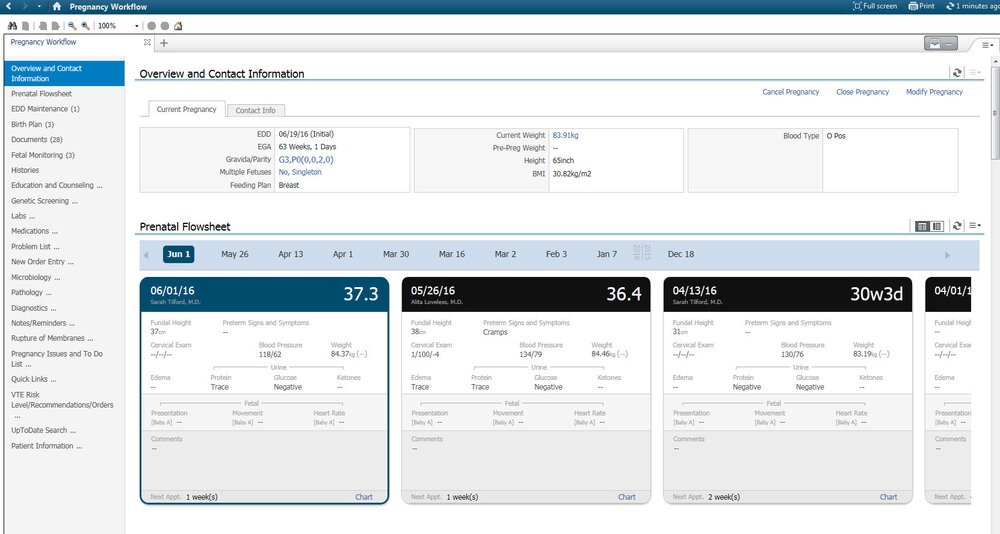
Attention: We will be taking a Cerner update to the mpages/summary pages.  The one with the most impact will be the Pregnancy Summary page.  It will be replaced with the Pregnancy Workflow mpage.  All impacted providers should have received via email, both a handout and a video tutorial. 

Please contact your HELP desk if you require further assistance. See the video and attached tutorial if needed.


Tutorial: Pregnancy Worfklow MPage

Discharge Medication Reconciliation Changes

Coming March 14, 2017...

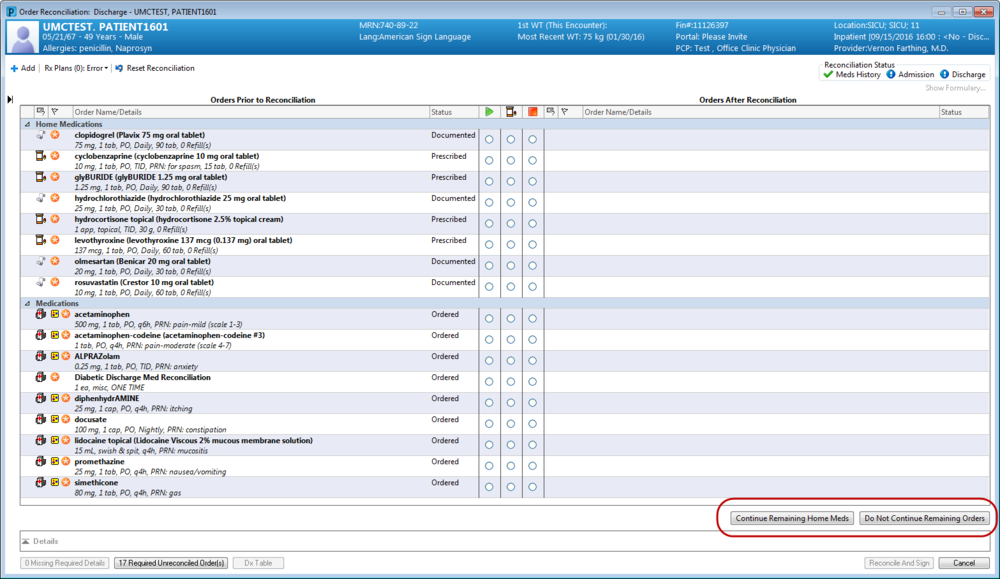
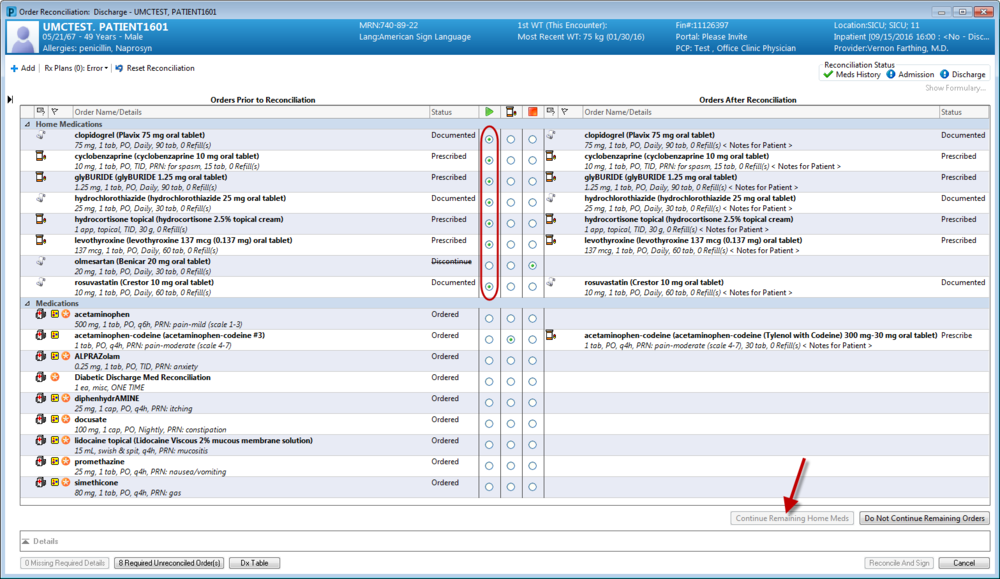
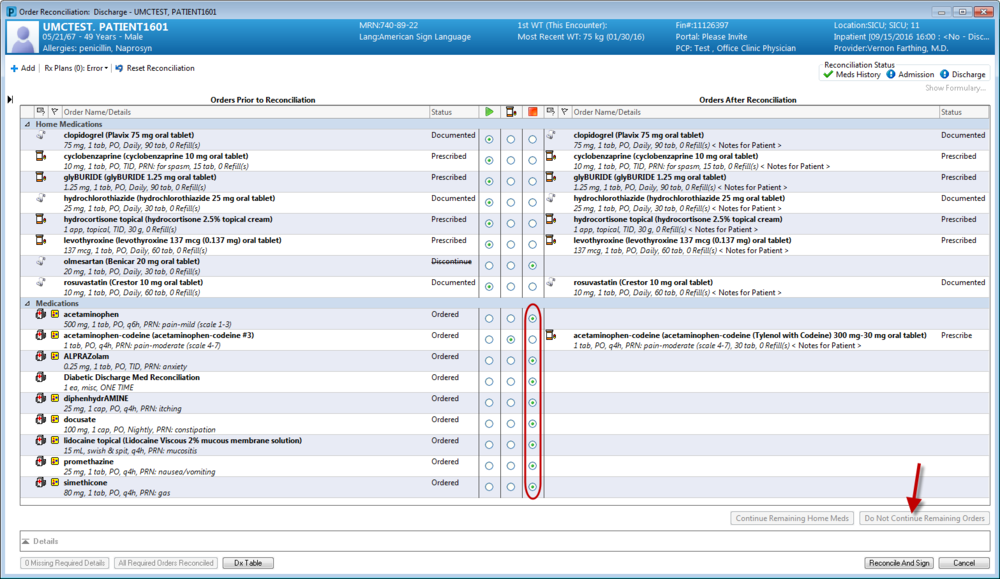
Discharge Med Reconciliation Changes:  In an effort to reduce medication errors during the discharge med reconciliation process, Use and Standards voted to remove the medication defaults and add two buttons for “Continue Remaining Home Meds” and “Do Not Continue Remaining Orders.”  This will help protect providers who discharge patients from making inadvertent medication errors involving duplicate therapies due to the medication defaults.

Use and Standards Decision: Remove all defaults.  Add a button for “Continue Remaining Home Meds” and a button for “Do Not Continue Remaining Orders.”

First, the provider should address all meds that specifically need to be continued, prescribed or discontinued after discharge. 

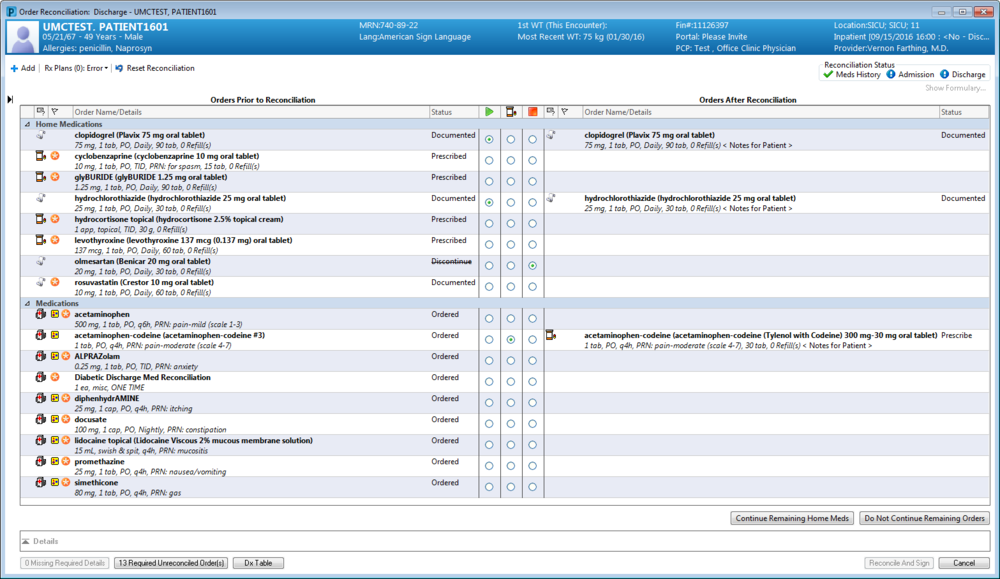
When Continue Remaining Home Meds button is clicked, documented home meds and prescriptions change to Continue with a status of ‘Documented’ or ‘Prescribed’.  Any changes that were already made will persist.

When the Do Not Continue Remaining Orders button is clicked, all inpatient and home medication orders that have not been addressed will be marked as Do Not Continue.

Lab Order: Modification of Wound Culture Order

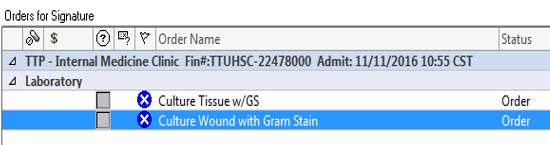
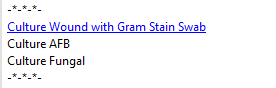
A recent request approved from change was the modification of the existing lab order, Culture Wound with Gram Stain.  In order to avoid confusion and loss of charges, the request to add the word SWAB to the end of this order was approved and completed. It is now easier to differentiate from other culture orders, such as the tissue culture order.


CURRENT VIEW:

Earliest Fill Date: CII Prescriptions

Earliest Fill Date for CII Scripts: Special Instructions

It has come to our attention that CII scripts being transmitted to pharmacies with an earliest fill date may require more clarification. When a prescription appears in an outpatient pharmacy queue, the earliest fill date may not be designated with its own field, but instead display as the start date of the prescription. This issue appears to be dependent upon the software used by the receiving pharmacy and therefore is not something under our control.

To avoid any chance of misinterpretation or confusion, it is our recommendation that providers who wish to send a CII script that will start at a later date should fill out both the Earliest Fill Date field within Cerner and include a note in the Special Instructions field that clearly states the earliest fill date of the script.

Morphine Naming Convention Changes

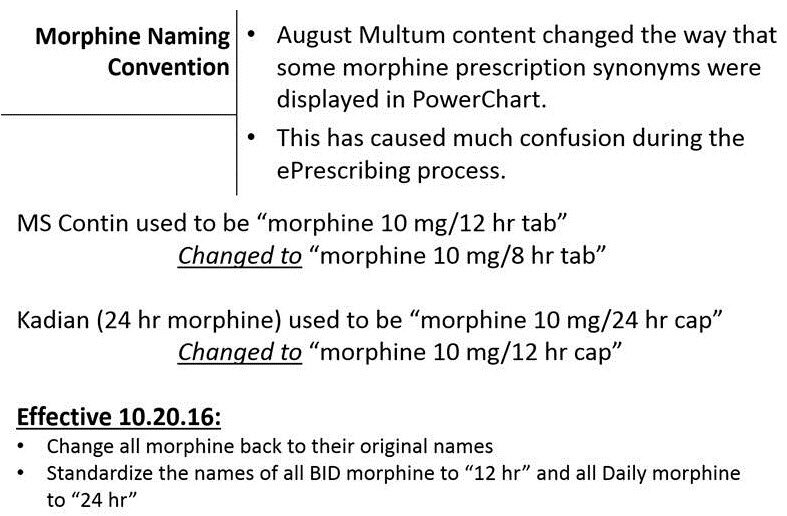
When prescribing morphine ER, be extra diligent about the formulation you are choosing. The display of this drug (both brand and generic) has recently undergone changes. Based on the decision of the interdisciplinary committee, Use & Standards, the following is the final outcome:


*Multum = The software solutions and databases created by Cerner Multum™ are central to many clinical decision support systems and electronic health records currently in use by hospital systems, home care providers, physician offices, and pharmacies worldwide...Cerner Multum™ provides drug information that is a core component of these applications (Cerner, 2016).


PC Touch: 2016 Summer & Fall Updates

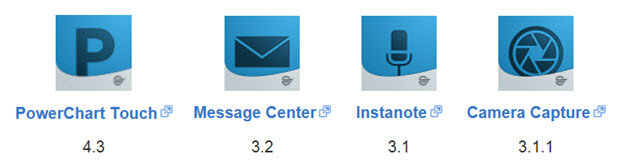
PowerChart Touch 4.2 included an updated version of the Nuance SDK which allows users to manage user level auto-text from their device. To manage auto-text follow the instructions below.

Getting started

To get started managing auto-text do one of the following:

Creating a new auto-text

To create a new auto-text, select the + sign. On the next screen enter text into the required fields:

  • Name
  • Pronunciation - include the word Insert at the beginning if you wish to say "Insert [auto-text name]" to use the auto-text
  • Auto-text content

The Description field is optional.

https://connect.ucern.com/servlet/JiveServlet/downloadImage/102-568678-1-362498/Example.png

You can use the Insert Field button to add fields that allow for navigation by using the next field and previous field commands.

When done select the Save option. Once the message "The auto-text has been saved." is displayed the auto-text has been saved.

https://connect.ucern.com/servlet/JiveServlet/downloadImage/102-568678-1-362508/a-t+has+been+saved.png

Editing auto-text

To edit an existing auto-text select the auto-text and then select the Edit button. The Edit button will appear when only one auto-text has been selected.

https://connect.ucern.com/servlet/JiveServlet/downloadImage/102-568678-1-362499/edit.png

Make any necessary edits and select the save option. Once the message "The auto-text has been saved." is displayed the changes to the auto-text have been saved.

https://connect.ucern.com/servlet/JiveServlet/downloadImage/102-568678-1-362507/a-t+has+been+saved.png

Creating new auto-text from selected text

You can use text that has been entered into a field in PowerChart to create a new auto-text. After you have entered the text you wish to become an auto-text, select the contents by saying "Select all."

https://connect.ucern.com/servlet/JiveServlet/downloadImage/102-568678-1-362515/new+text.png

Once all of the text is selected in the field say "Make that an auto-text."

From the next screen complete the steps noted in the Creating a new auto-text section above.

https://connect.ucern.com/servlet/JiveServlet/downloadImage/102-568678-1-362516/new+a-t+from+text.png


PowerChart Touch 4.6, which is planned to be available for download in November, will require that user devices are running iOS 9.3 or later. We are providing this information now so that devices that are not on iOS 9.3 or later can upgrade prior to the release of iOS 10.

In the upcoming weeks we will post additional information about PowerChart Touch apps and any issues there may be when using iOS 10.

As a reminder the beta release of iOS 10 is not supported with PowerChart Touch


Urgent Update: EPCS MS Contin

DUE TO RECENT CHANGES, THESE OPTIONS ARE BEING MOVED BACK TO THE PRIOR SETTINGS. DISREGARD THE ARTICLE BELOW.  DELETION OF THIS ARTICLE WILL HAPPEN BY 12.1.16

~Editor-in-chief


Due to a change by one of our electronic prescribing vendors the selections for all strengths of MS Contin 12 hr extended release oral tablets are no longer available for ePrescribing.

However, the actual drug formulation has not changed and can be prescribed using the 8 hr extended release oral tablet options that are now available in PowerChart.  If you have a patient on this medication you will NOT be able to renew these prescriptions. You must create a new prescription using the equivalent 8 hr choices. You may continue to prescribe this medication every 12 hours at your professional discretion.

Thank you for your patience.